Observatory
Eastern Europe
The Land Matrix Regional Focal Point (RFP) Eastern Europe, coordinated by the Centre for Environmental Initiatives Ecoaction, aims to facilitate data entry, communication, and research related to large-scale land acquisitions (LSLAs) in the region to achieve its goal of creating a network of stakeholders and increasing their involvement in the land debate.
Latest resources
Deal narratives
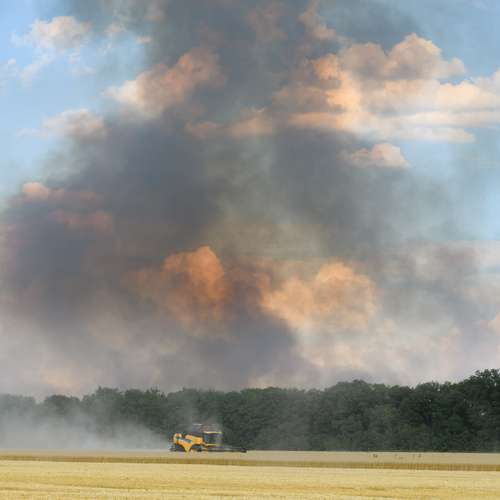
Deal Narrative 2: As pressure builds on available agricultural land in Ukraine, can the country balance environmental protection with economic needs?
2024-08-28Read more >>With the full-scale invasion in Ukraine by Russia in 2022, in addition to taking a heavy toll on human lives, significant negative impact from the military action on soil health and productivity has been observed, with more than 30% of Ukrainian land now unsuitable for agriculture. In the meantime, ongoing …
Publications
How much access do farmers have to agricultural land in Ukraine? A community-level analysis
2026-07-08Read more >>Land concentration and its impact on small farmers
Land concentration is not a new problem; it has long been recognised at the global level as a source of economic, social, and environmental risks for rural development – and it does not only occur in developing countries: land grabbing processes are …
Publications
Trading carbon credits for human rights: Does Article 6.4 of the Paris Agreement protect Indigenous Peoples and local communities?
2026-04-30Read more >>A new report by the Land Matrix Initiative and Carbon Market Watch examines whether the Paris Agreement’s Article 6.4 mechanism adequately protects Indigenous Peoples and local communities from bearing the brunt of carbon market expansion.
As the Paris Agreement Crediting Mechanism (Article 6.4) gains momentum, a growing number of projects …
Country profiles
Country profile: Serbia
2024-07-25Read more >>A favourable climate and large cultivated areas create ideal conditions for varied agricultural production in Serbia. At the same time, however, complex and tangled land relations, a legacy of its past as a socialist Yugoslav state, exacerbate the issue of land ownership, even after the privatisation process in the 1990s …